
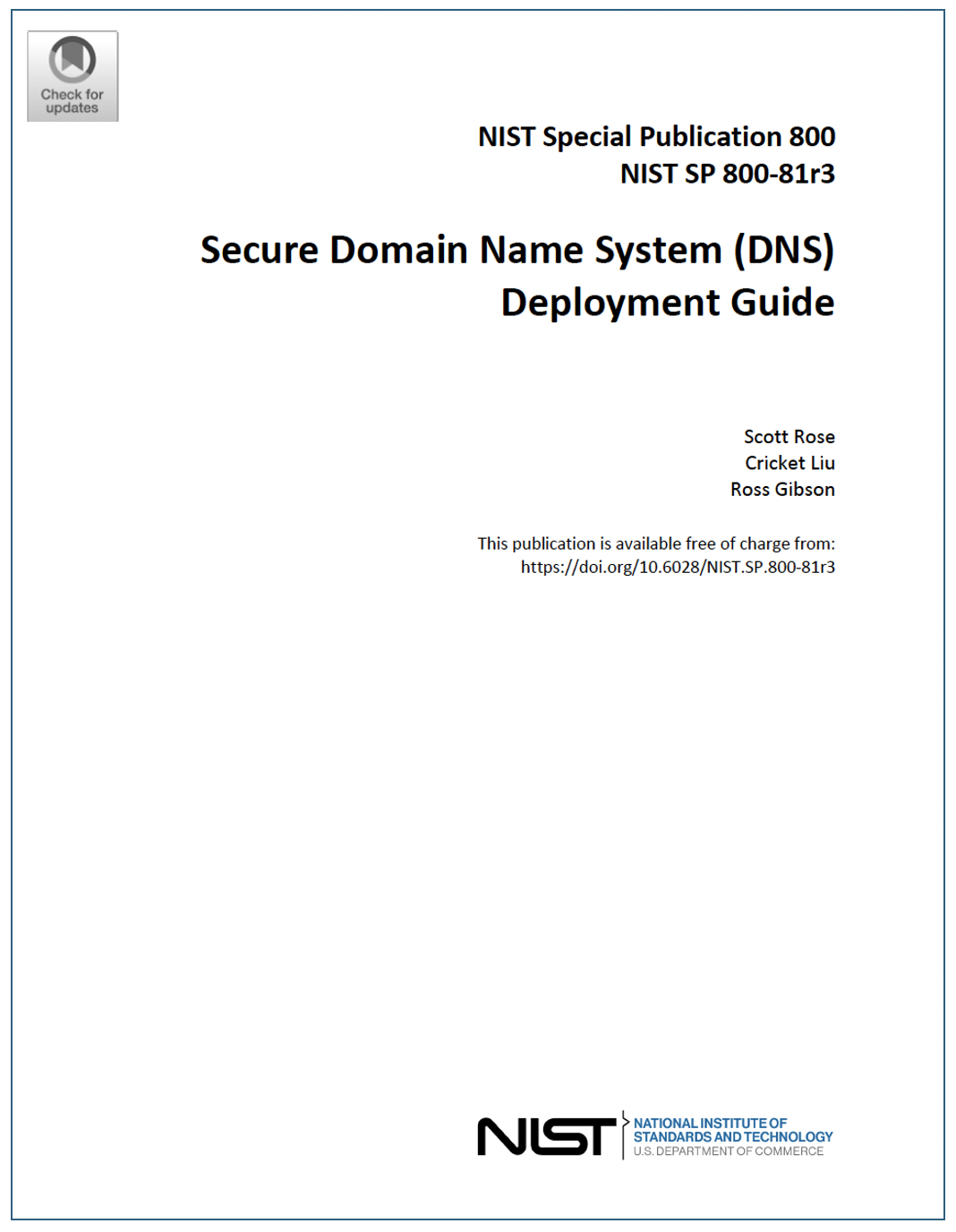
On March 19, 2026, NIST finalized the SP 800-81r3 (Secure DNS Deployment Guide). This isn’t just a routine update; it is a fundamental shift in how we approach Internet resilience and organizational trust.
For years, DNS was the “quiet utility” in the background. In the modern threat landscape, NIST Revision 3 reimagines it as a proactive security control point.
Why does this matter for your 2026 security roadmap?
1️⃣ DNS as a Policy Enforcement Point (PEP): Moving beyond simple resolution, r3 integrates DNS into Zero Trust Architecture. By leveraging DNS as a PEP, organizations can neutralize threats such as malware, phishing, and command and control (C2) callbacks at the resolution stage, before a single packet of malicious data is exchanged.
2️⃣ Closing the Privacy Gap: For the first time, we have a definitive standard for deploying DNS-over-HTTPS (DoH) and DNS-over-TLS (DoT) at scale. This effectively encrypts the “digital breadcrumbs” of our network metadata, protecting against unauthorized surveillance and data harvesting.
3️⃣ Operational Resilience & Integrity: Through rigorous DNSSEC validation and the elimination of “dangling CNAME” exploits, r3 provides a fail-safe directory. In a world of automated attacks, your “Single Source of Truth” must be immutable.
NIST SP 800-81r3 ensures that DNS is no longer your weakest link, but your most resilient shield. Standardizing these protocols isn’t just about compliance, it’s about building an Internet that is secure by design.
Do you plan on auditing your DNS architecture against the new r3 standards?
 Niel Harper