
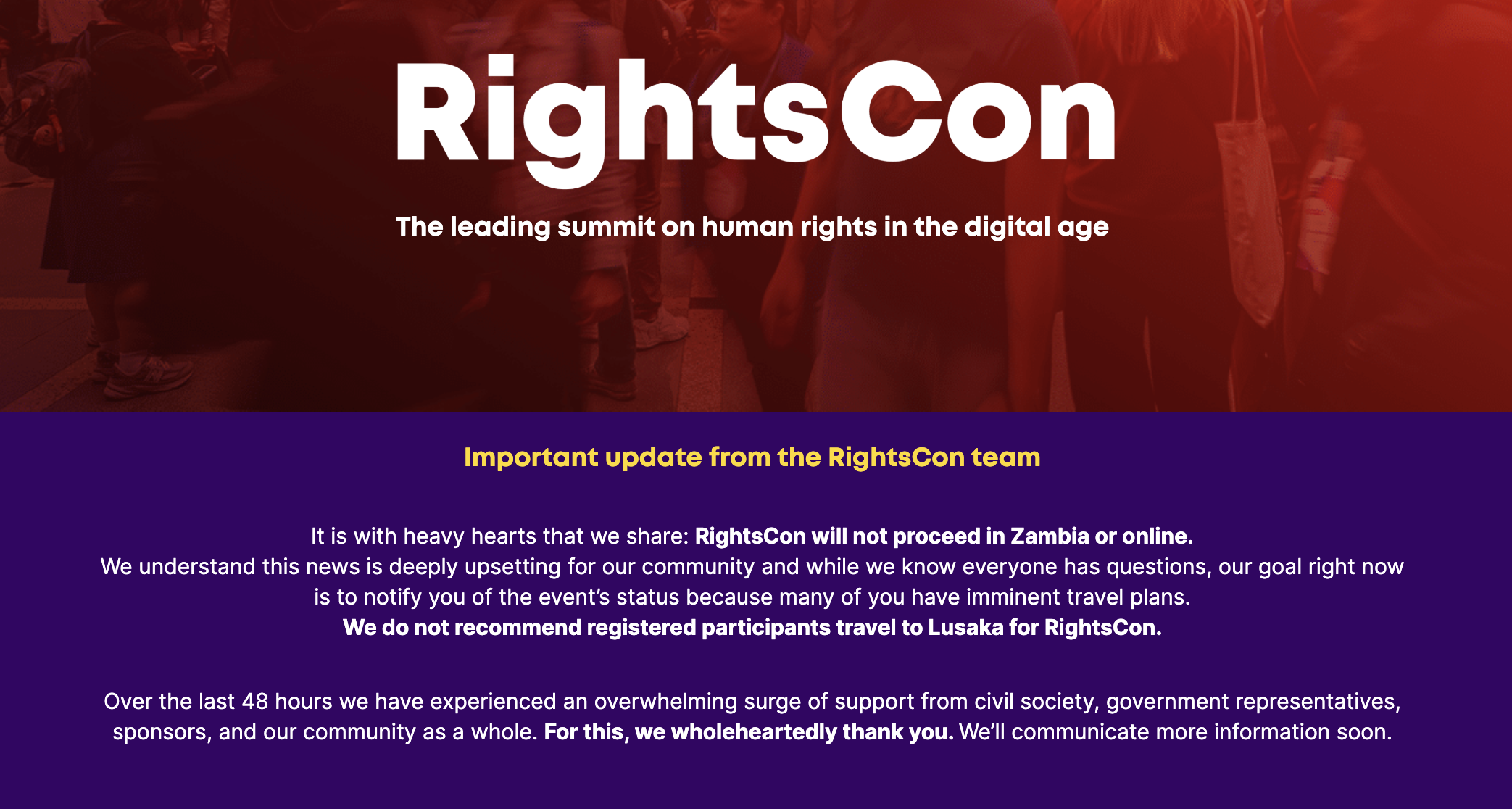
The sudden, last-minute cancellation of RightsCon 2026 by the Zambian government is more than just a logistical nightmare for the 5,000 delegates already en route, it is a chilling signal for the future of global civic discourse and Internet freedom.
As the world’s premier summit on human rights in the digital age, RightsCon was set to provide a vital platform for activists, technologists, and policymakers to tackle urgent issues like online censorship, AI surveillance, and the protection of marginalized voices.
Why this matters for all of us:
- The “National Values” Trap: The government’s justification, citing a lack of “alignment with national values”, is a familiar and dangerous euphemism used to suppress difficult conversations. When “values” are used as a filter for human rights dialogue, it sets a precedent that the state, not the citizens, decides which rights are worthy of discussion.
- The Closing of African Civic Space: Hosting RightsCon in Lusaka was supposed to be a milestone for African digital sovereignty. Instead, this cancellation reinforces a growing trend of “digital authoritarianism” across the continent, where governments prioritize state control over open, transparent debate.
- Silencing the Marginalized: RightsCon is one of the few global spaces where LGBTQ+ advocates, Sexual and Reproductive Health and Rights (SRHR) researchers, and digital rights defenders from the Global South can organize. Shutting it down disproportionately harms those already facing criminalization and digital exclusion.
- A Blow to Accountability: From surveillance technology to data privacy, holding Big Tech and governments accountable requires international collaboration. By blocking the gates to this summit, the Zambian government hasn’t just stopped a conference; it has attempted to stall the global movement for a free, open and human-centric Internet.
Digital rights are human rights. When a space for these rights is forcibly closed, the silence is deafening.

