What the Government of Barbados Needs to Do to Get Fintech Right

There’s a common misconception that IT governance, risk and control (GRC) professionals like myself impose unreasonable demands on those trying to innovate and deliver human, social and economic benefits to society. But this is the furthest thing from the truth – our role is to ensure that those who are delivering technological solutions understand the risks and impacts associated with their IT platforms, and mitigate them in an adequate, effective, and sustainable manner.

The aforementioned point is key as I will go on to explore the privacy, security, and socio-economic implications of two recent announcements by the Government of Barbados pertaining to the implementation of Blockchain-related technology in the country. In a September 19th article titled ‘E-currency pilot coming’, it was stated that Prime Minister Mia Mottley “did not give details of the planned mobile wallet pilot project or when it would begin but gave the assurance that it would not be done in a reckless manner.” Barbados Today published an article on September 25th which stated ‘BSE to begin crypto-trading’, essentially heralding the decision of the Barbados Stock Exchange to trade in security tokens or crypto assets.

Given my intimate knowledge of privacy and security weaknesses in both the public and private sectors, the PM’s words do not instill in me any great confidence around the robustness of the security controls that will accompany these projects. The implementation of e-currency is a complex undertaking, that if not done correctly, can have a material impact on the country’s already weakened economic position. Security tokens are an extremely nascent solution with a lot of potential, but that doesn’t exempt them from security and privacy deficiencies. As such, I want to delve into some of the key areas that must be addressed before these solutions are widely deployed across our beloved nation.

Contract management and due diligence

Before any contracts are signed to commence these projects, the government must understand where personal data of Barbadian citizens will be stored. To provision users onto these platforms, personal data will need to be collected for AML and KYC purposes such as name, address, phone number, driver’s license, passport details, etc.

If the data is stored outside of Barbados, the privacy of Bajans may not be safeguarded as it will be subject to the laws and regulations of the jurisdiction in which the data resides (meaning that the legislation of a foreign country could permit them access to any and all data kept on Barbadian citizens). This is particularly concerning given the absence of data protection legislation in Barbados that would force any fintech company to ensure that transnational data flows must only occur where the destination country has an adequate legal framework in place to protect the rights of data subjects.

The lack of data protection legislation presents another problem in terms of imposing strict obligations on fintech providers to uphold the rights of data subjects. This includes setting requirements and fines for both data controllers and data processors as it pertains to protecting personal and sensitive data, obtaining consent to share personal/sensitive data, reporting data breaches to government and data subjects, among other rules. Hence, it would be in the best interests of Barbados citizens and foreign nationals if the 2018 Data Protection Bill was enacted into law before the launch of the new platforms […]

To view the remaining guidance on Technical Architecture, Deployment & Support, and Monitoring & Evaluation, you can read the entire blog here.

The Impact of the GDPR on the Hospitality Sector

Today I held a General Data Protection Regulations (GDPR) awareness seminar for members of the Barbados Hotel and Tourism Association (BHTA).

With regards to data security, there are few sectors more vulnerable to data-related threats than the hospitality sector. The volume of processed personal and credit card information being handed over to hotels, restaurants, etc. on a daily basis makes the sector extremely vulnerable. With the enforcement deadline having passed on 25 May, several companies in the sector have not updated their data protection processes, and are at risk for large financial penalties.

The seminar touched on key areas such as the following:

  1. Major Differences between the Data Protection Directive 95/46/EC and the GDPR
  2. Overall readiness across the hospitality sector
  3. Capturing and using personal data going forward
  4. Consent and contextual use of personal data
  5. How the GDPR affects repeat business and email marketing
  6. How the GDPR affects third-party data processors
  7. The rights of data subjects under the GDPR
  8. The difference between ‘personal data’ and ‘sensitive data’, and how they should be treated
  9. Other key aspects of the GDPR such as the Data Protection Officer (DPO), Data Protection Impact Assessments (DPIA) and ‘privacy by design’
  10. How to update strategies for websites, data governance, and marketing to become GDPR compliant

My takeaway from this session was that many businesses — small to large — have not made any steps to align their operations and processes with the requirements of the GDPR. Several others are defiantly refusing to address privacy and data protection within their organizations. However, what was gratifying is that I received a torrent of emails in the hours and days after from hoteliers, many of them eager to engage subject matter experts (SMEs) to assist in improving their control framework to meet the rigorous demands of the GDPR. Hopefully, this interest and willingness to improve is sustainable. There’s a lot of work to be done!


Featured Article in Seguridad y Sociedad Journal

Super humbled to be featured in the August edition of the ‘Seguridad y Sociedad’ journal from the Institute for Strategic Studies and Public Policies (IEEPP), a Latin American think tank.

The IEEPP Seguridad y Sociedad Journal, Year 7m Issue 15 is available here.

My writings can be found on pages 29 -33.


Internet Infrastructure Security Guidelines for Africa

To facilitate implementation of the Convention, the African Union Commission (AUC) asked the Internet Society (ISOC) to jointly develop the Internet Infrastructure Security Guidelines for Africa. The Guidelines were created with contributions from regional and global Internet infrastructure security experts, government and CERT representatives, and network and ccTLD DNS operators. As one of the cybersecurity experts involved in the development of these Guidelines, I am proud and deeply humbled to have made a contribution.

The Guidelines emphasize the importance of the multistakeholder model and a collaborative security approach in protecting Internet infrastructure. The Guidelines put forward four essential principles of Internet infrastructure security: Awareness, Responsibility, Cooperation, and adherence to Fundamental Rights and Internet Properties.

These critical actions are tailored to the African cybersecurity environment’s unique features: a shortage of skilled human resources; limited resources (including financial) for governments and organizations to allocate for cyber security; limited levels of awareness of cyber security issues among stakeholders; and a general lack of awareness of the risks involved in the use of information and communication technologies (ICTs).

Only with ongoing multistakeholder efforts from the African Internet community can the continent overcome its challenges, embrace its opportunities, and become an Internet world leader.

Internet Infrastructure Security in Africa

The Internet is becoming critical infrastructure for Africa. Across the continent, Africans increasingly depend on the Internet to communicate, socialize, and most importantly to conduct their day-to-day jobs and activities. A major outage of the Internet infrastructure is a prevailing fear for network operators, governments and users alike. But, has Africa secured its Internet Infrastructure?

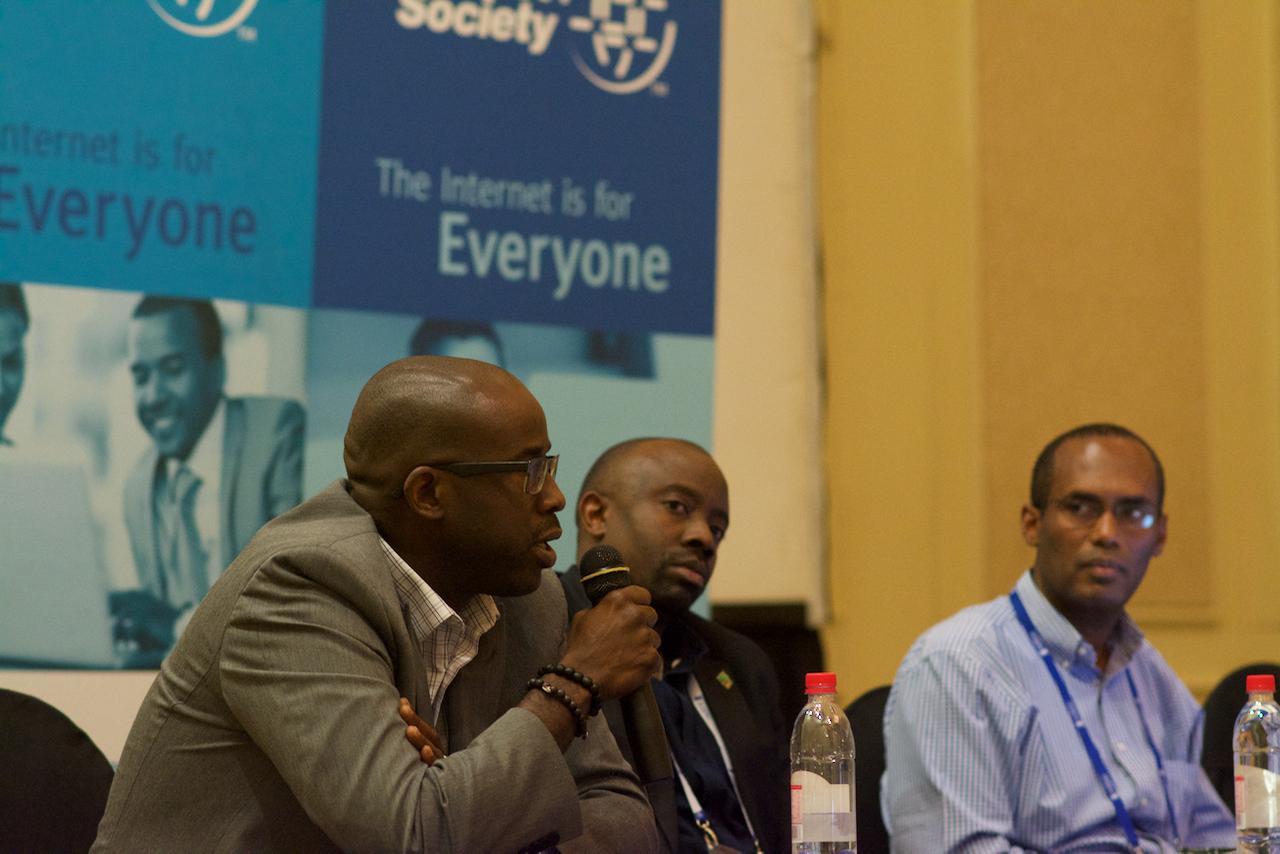
I just finished participating in a panel discussion titled ‘Internet Infrastructure Security in Africa’ at the African Internet Summit (AIS) in Gaborone, Botswana. We sought to identify the major security challenges facing the Internet infrastructure driving Africa’s digital economies. This panel is a precursor to my participation in developing guidelines that will serve African countries in their efforts to protect their Internet Infrastructure from present and future threats.

My speaking points were specifically about existing mechanisms to combat various threats, and the cooperation between key stakeholders to defend their organizations/countries from and ever changing threat landscape. I also described what types of structures were needed at the national and regional level based on best practices from around the world.